NetNest
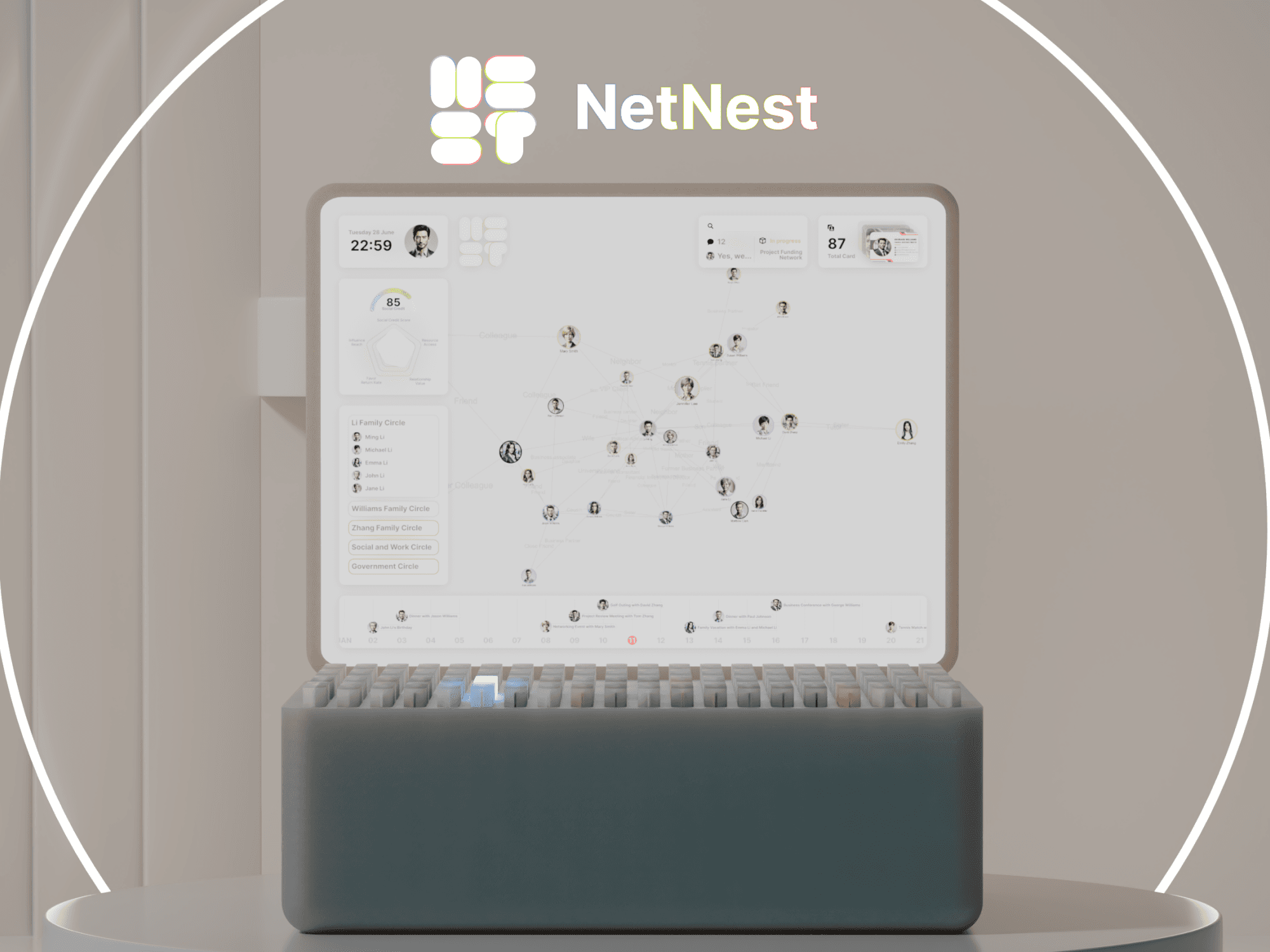
NetNest is a smart business card holder and social management platform designed for a speculative future shaped by utilitarian relationships. It helps users strategically manage, optimize, and trade their social network using tools like AI-powered relationship pathfinding and a resource trading platform.
Year
2024
Category
Individual Project
My Role
Product/UI/UX Designer
Tools
Figma/Blender/Adobe Suite
Project Video
Overview
Inspiration
I grew up in a family deeply immersed in transactional relationships, where personal interactions were frequently influenced by business roles. Drawing inspiration from real-world examples like LinkedIn and the social dynamics depicted in Black Mirror's "Nosedive," I wanted to explore a future in which relationships are treated as tradable commodities.
This critical perspective inspired the creation of NetNest.
Problem
In a future where social interaction becomes purely transactional, how can a tool help individuals navigate and benefit from such a system?
Goal
Visualize a speculative future shaped by utilitarian logic
Critique and expose the consequences of commodified relationships
Design a system that functions within this imagined reality
System World Building
Speculative Future
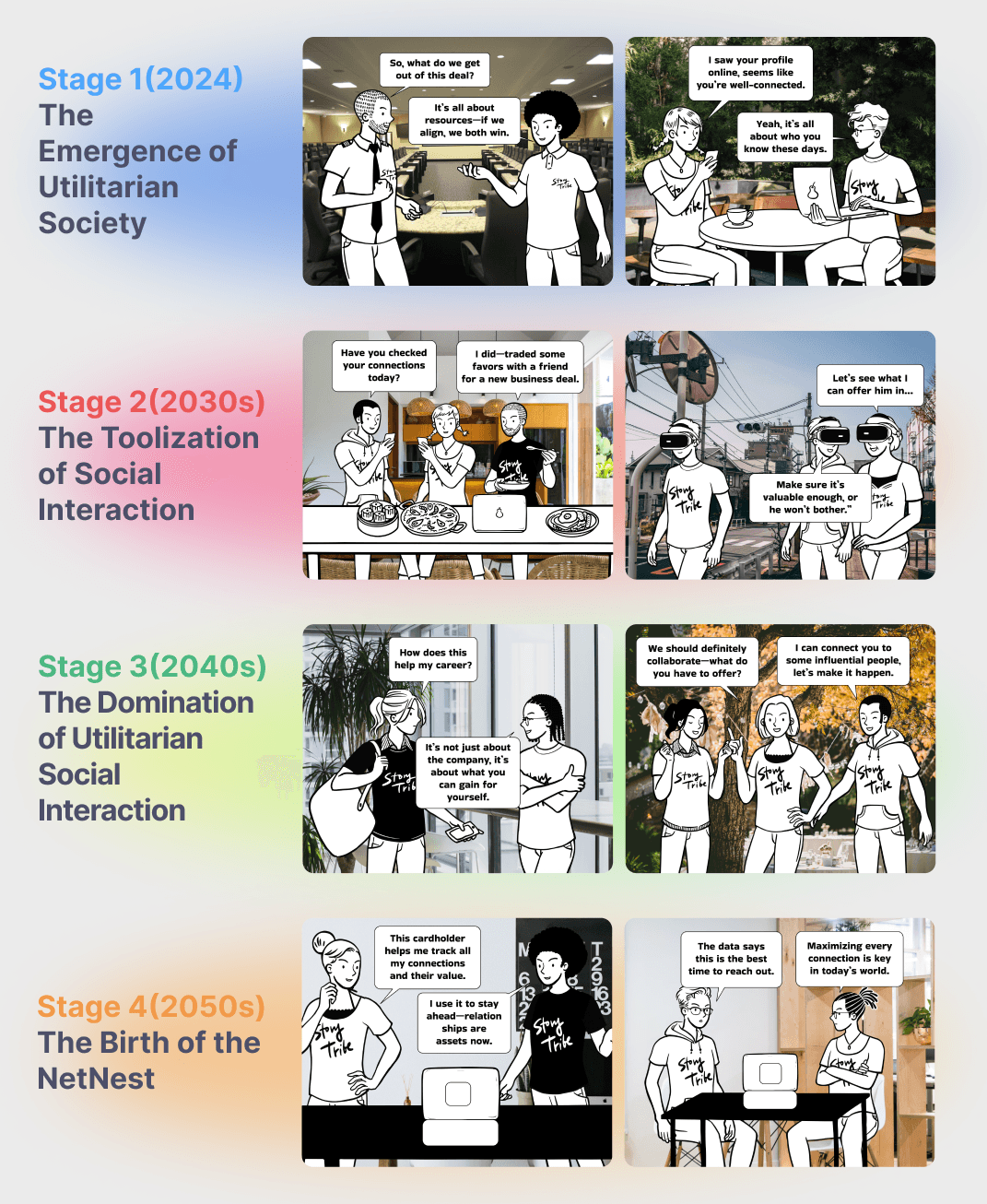
4 Stage Timeline:
Stage 1 (2024): The Emergence of Utilitarian Society
Stage 2 (2030s): The Toolization of Social Interaction
Stage 3 (2040s): The Domination of Utilitarian Social Interaction
Stage 4 (2050s): The Birth of the NetNest
Li Ming's Story
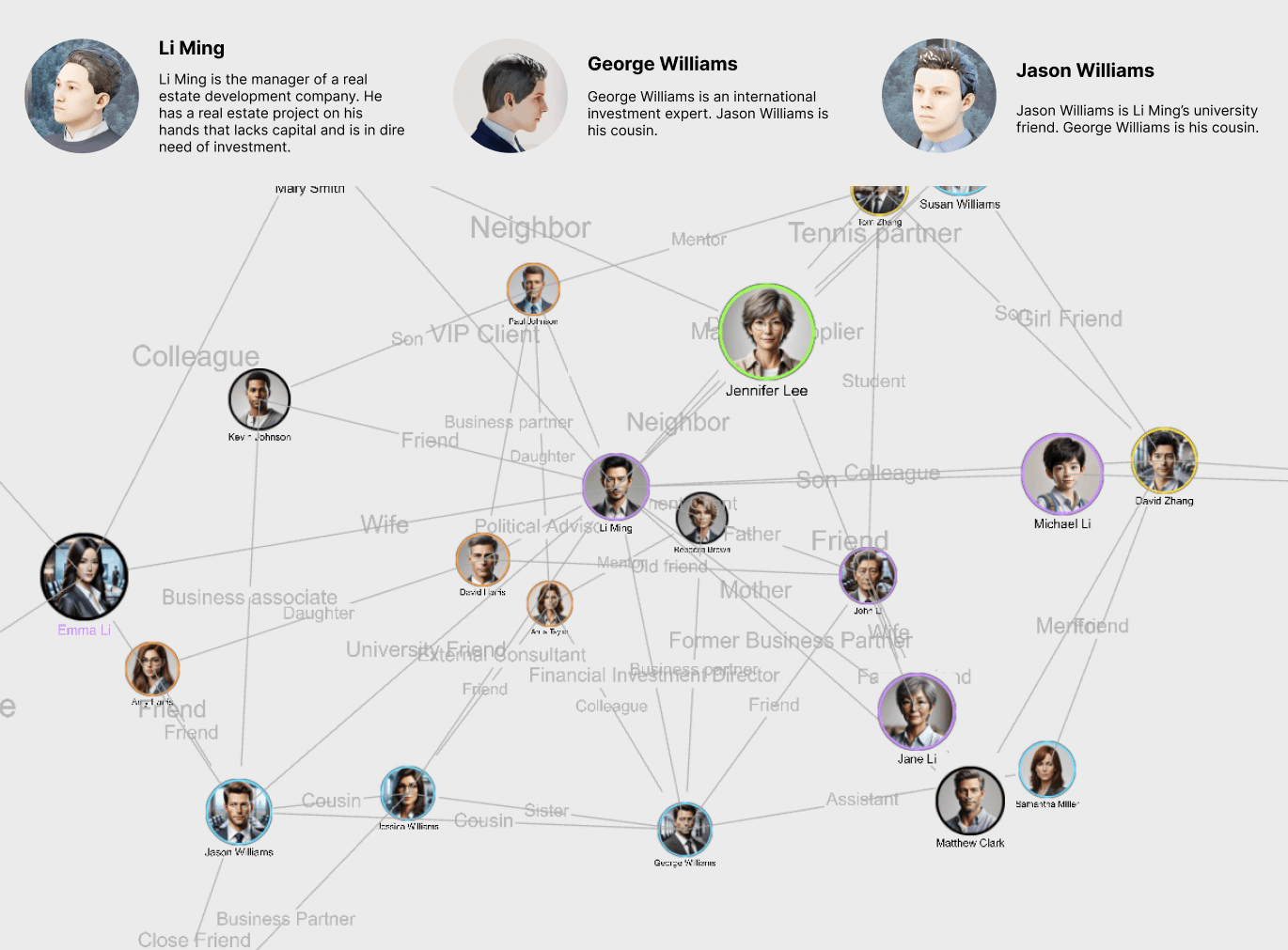
At the heart of NetNest’s speculative narrative is Li Ming, a fictional character navigating a society where every relationship is transactional. As a mid-level professional in the real estate sector, Li Ming must carefully manage his social network to secure funding, government approvals, and strategic partnerships.
To ground this narrative, a detailed relationship map was built, featuring over 25 interconnected characters including family members, colleagues, officials, and intermediaries.
Design Process
Features & User Flows
Sketches
Branding
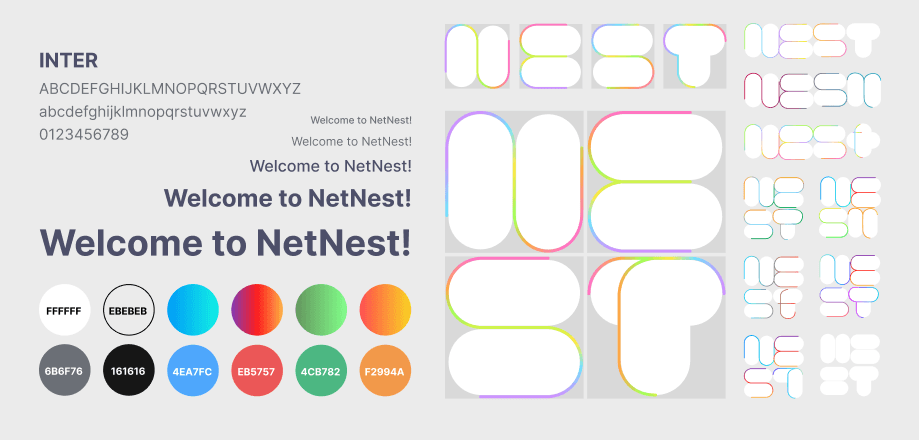
For the branding design, I aimed to emphasize NetNest's technological attributes through a clean, white design, while incorporating vibrant gradient colors to create a more lively and engaging aesthetic, avoiding the subdued and cold impression typical of many tech products. The logo features a pill-shaped structure resembling a nest, with rounded rectangles symbolizing the business card holder within the NetNest product. Colorful gradient lines outline the letters "NEST," adding a dynamic touch. The typography uses the highly legible and minimalist Inter font, further reinforcing the sleek, modern style of the product.
Outcomes
Product Design
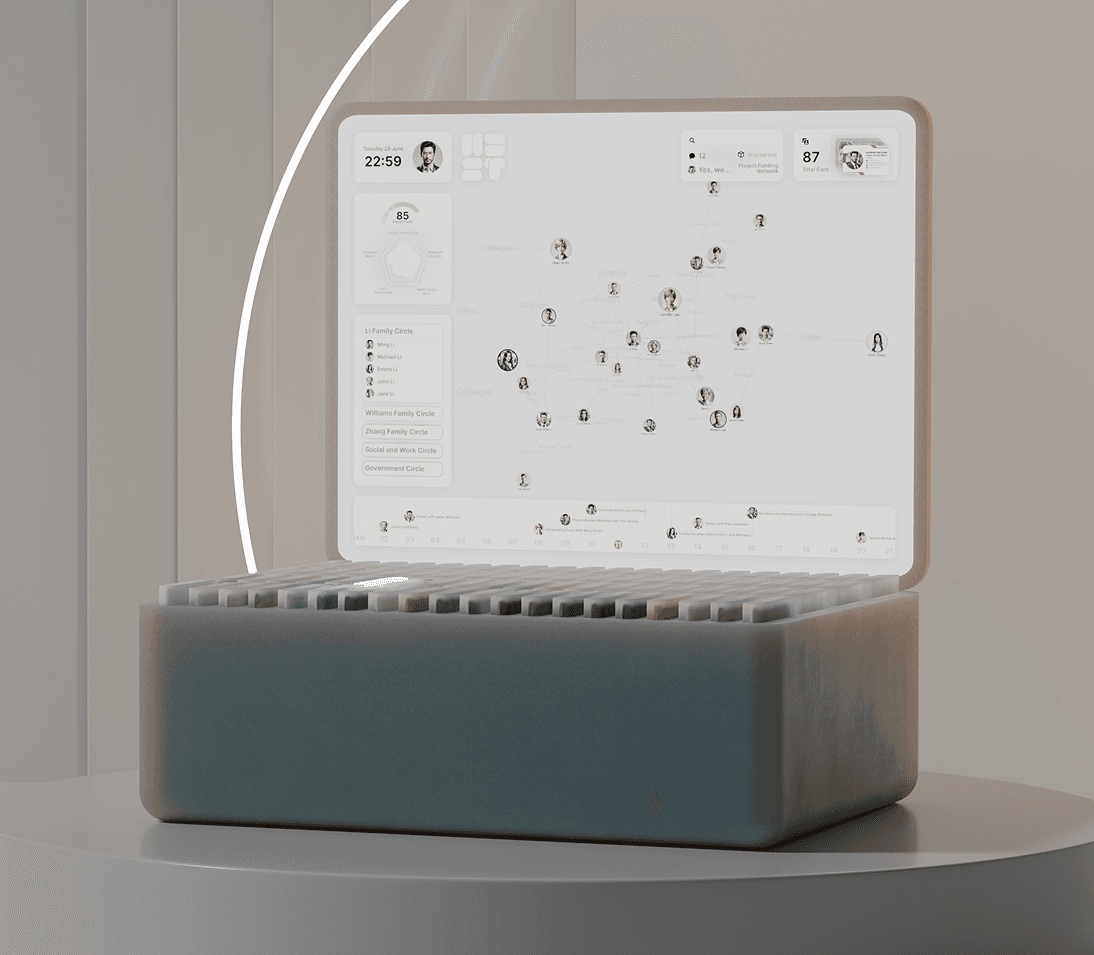
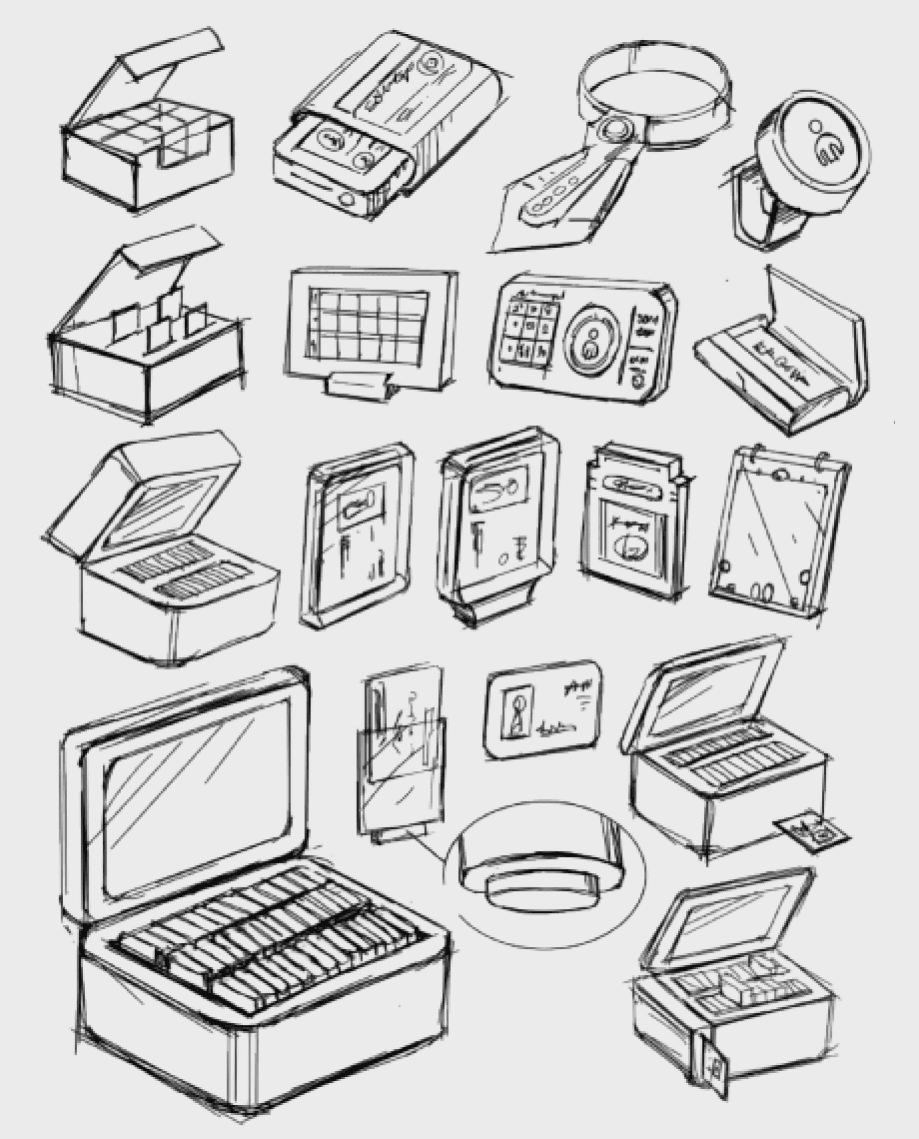
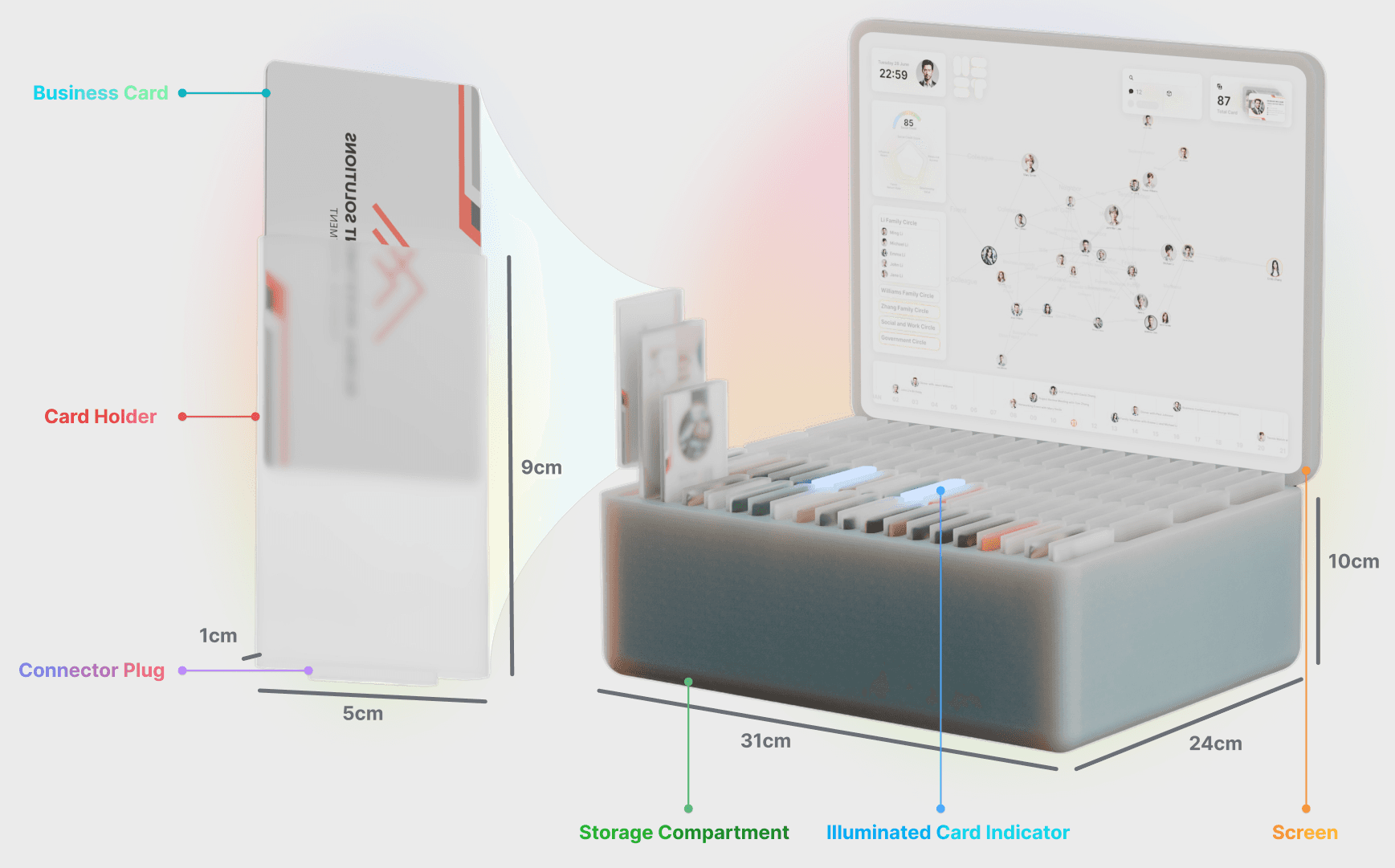
NetNest is a smart business card holder reimagined for a future where social capital is a currency. It stores physical cards in modular protector shells that plug into an illuminated storage system, allowing real-time interaction guided by a touchscreen interface. More than just storage, NetNest scans, analyzes, and visualizes each card’s network value—blending physical tactility with digital intelligence to help users navigate and maximize their social connections with precision.


UI Design
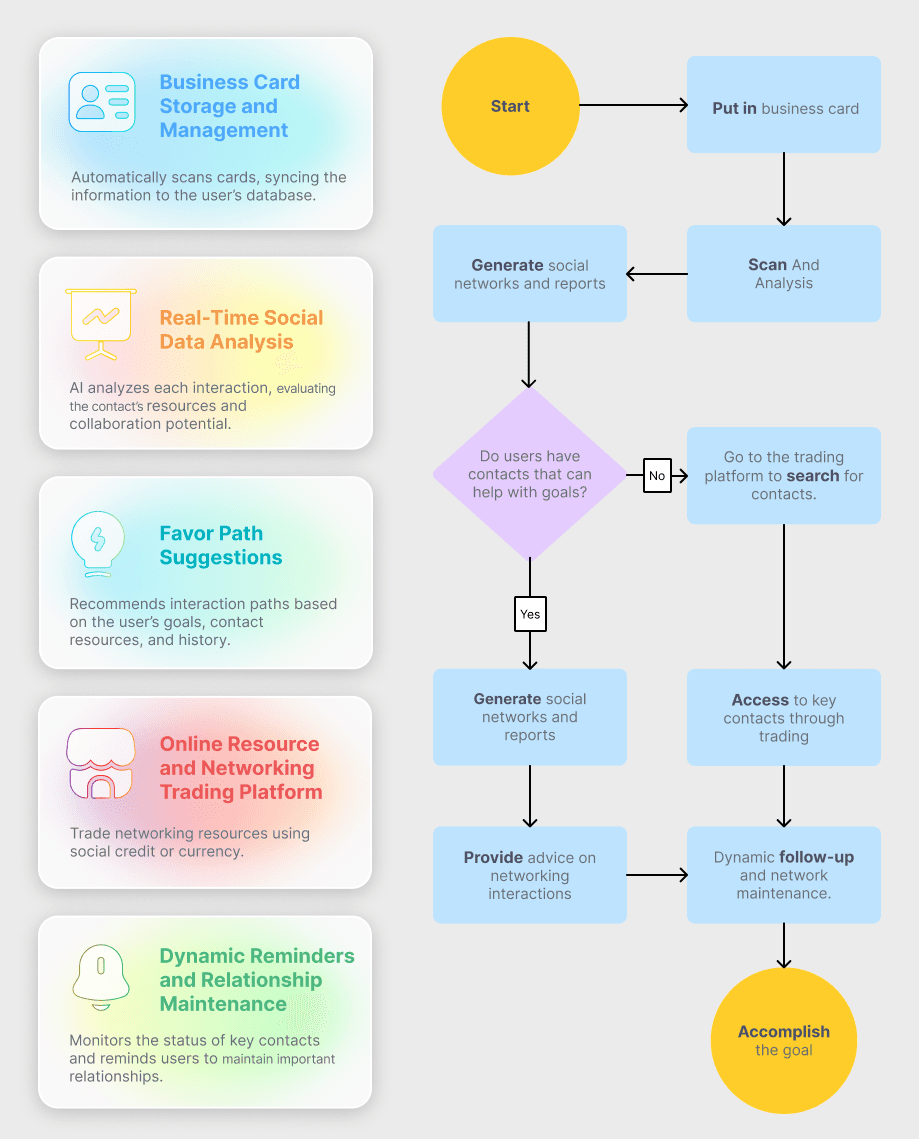
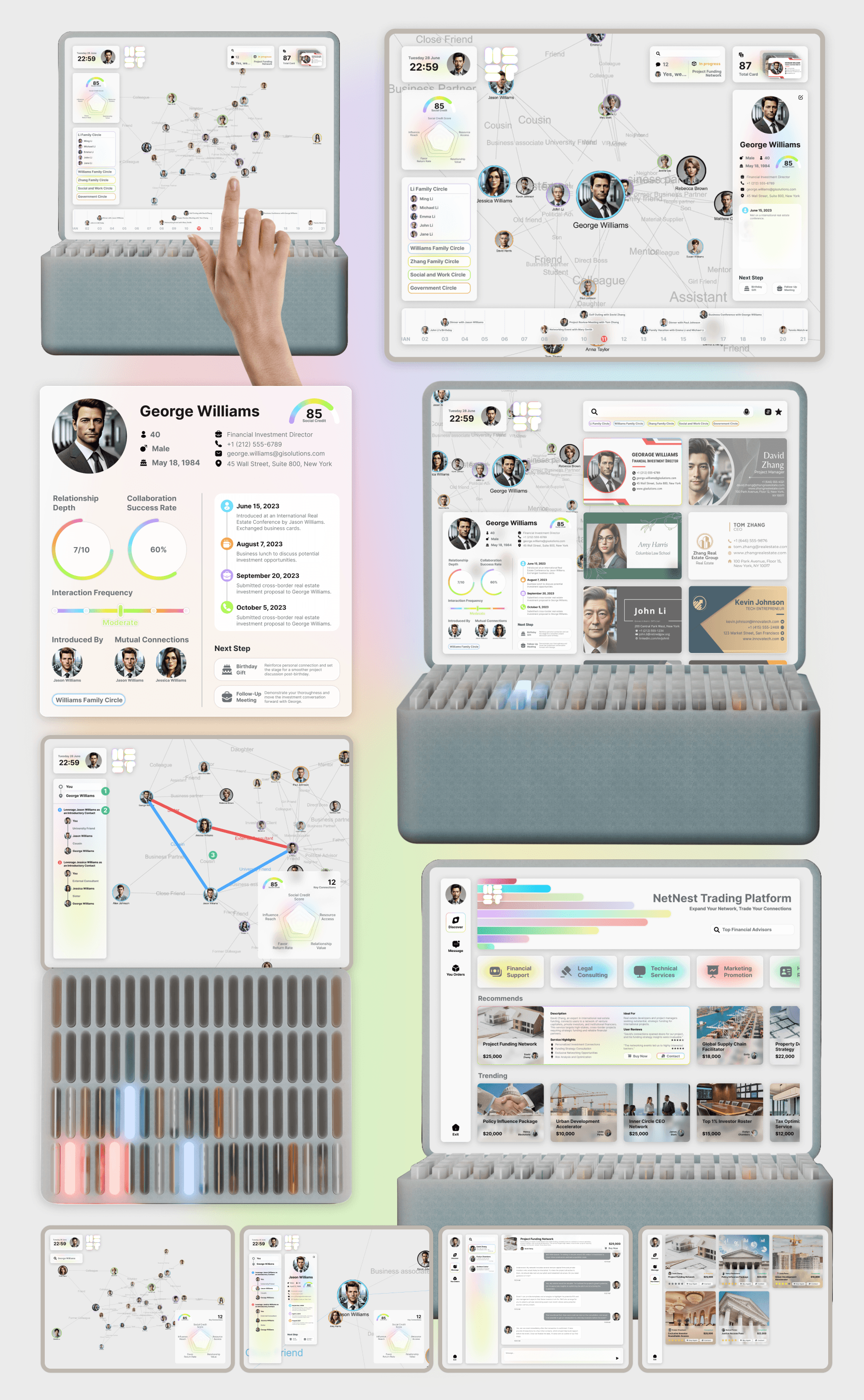
NetNest’s UI is crafted to visualize and manage social value in a highly utilitarian context. Key features include a 3D social network map that displays all contact connections in a dynamic, explorable space; a relationship pathfinder that uses AI to calculate the shortest strategic route to reach a desired person; and a trading platform where users can browse, buy, or sell human resources like connections and influence. Additional features like real-time interaction analysis, social credit scoring, and dynamic reminders for relationship maintenance all contribute to a seamless, optimized interface that reflects the logic of a transactional society.
Home
Business Card Gallery
Relationship Pathfinder
Trading Platform
Animation
What I Learned
Through designing NetNest, I explored how speculative design can be used as a critical tool to reflect on the future of human relationships in a data-driven world. I learned how to balance physical product thinking with digital systems, and how narrative, interface, and interaction can work together to communicate complex societal critiques. This project deepened my understanding of designing for emotional nuance within cold, transactional systems—and pushed me to think not just about usability, but about the ethical implications of technology.
Dark Sand is a mobile app and wearable device that uses AI and EEG technology to visualize, record, and analyze dreams.